
Softscaping in Landscaping: Common Design Questions

When you invest heavily in your property, planting decisions stop being simple. You may know what you like visually, but questions surface quickly. How will this look in five years? Will it stay manageable? Will future changes feel intentional or pieced together? These are common concerns for homeowners who care deeply about their landscape but do not want to spend weekends managing it.
Without a clear planting strategy, landscapes often drift. One adjustment leads to another. Shrubs outgrow their space. Maintenance becomes reactive instead of predictable. Over time, enjoyment fades, even though the property itself remains impressive.
This FAQ addresses the most common softscaping in landscaping questions you search for answers to when planning or refining planting decisions. By understanding how planting fits into the broader landscape, you gain clarity, confidence, and a path forward that protects both your time and your property.
What Does Softscaping Include In Landscaping?
Softscaping includes the living elements of your landscape. Trees, shrubs, perennials, ornamental grasses, groundcovers, and seasonal plantings all fall under this category. These elements define how your property looks, matures, and functions over time.
When homeowners ask softscaping in landscaping questions, they are often trying to understand where planting fits within the whole environment. Softscaping is not surface-level decoration. It establishes structure, scale, privacy, and flow.
Softscaping commonly includes:
- Trees that provide canopy, screening, and long-term structure.
- Shrubs that define outdoor rooms and transitions.
- Perennials that bring texture and seasonal interest.
- Groundcovers that stabilize soil and reduce visual clutter.
- Layered planting that supports balance and continuity.
If you have ever asked what is softscaping in landscaping, the simplest answer is that it is the living framework that shapes how you experience your outdoor space every day. Softscaping elements like established privacy screens, canopy trees, and year-round seasonal color create a sense of place and permanence that hardscaping alone cannot achieve. While hardscaping provides functional space, softscaping provides the desirable atmosphere. Homeowners asking softscaping in landscaping questions often realize that strategic planting is an investment in marketability, providing a significant return on investment when the time comes to sell.
How Is Softscaping Different From Hardscaping?

Hardscaping refers to built features such as patios, walkways, retaining walls, steps, and courts. Softscaping complements those elements by softening edges and adding movement and seasonal change. Many softscaping in landscaping questions revolve around how these two work together. Hardscaping provides form and function. Softscaping provides atmosphere and comfort.
Key distinctions include:
- Hardscaping stays fixed
- Softscaping evolves
- Hardscaping defines use
- Softscaping defines feeling
When planting decisions are made alongside stonework, drainage, and grading, the landscape feels cohesive. This alignment reflects an integrated landscaping approach where no decision is made in isolation. Considering the specific microclimates within your property, such as shade from buildings or wind exposure, is crucial. Ignoring these factors often leads to plants struggling to thrive, necessitating frequent replacement or intensive intervention.
How Do Plant Choices Affect Long-Term Landscaping Care?
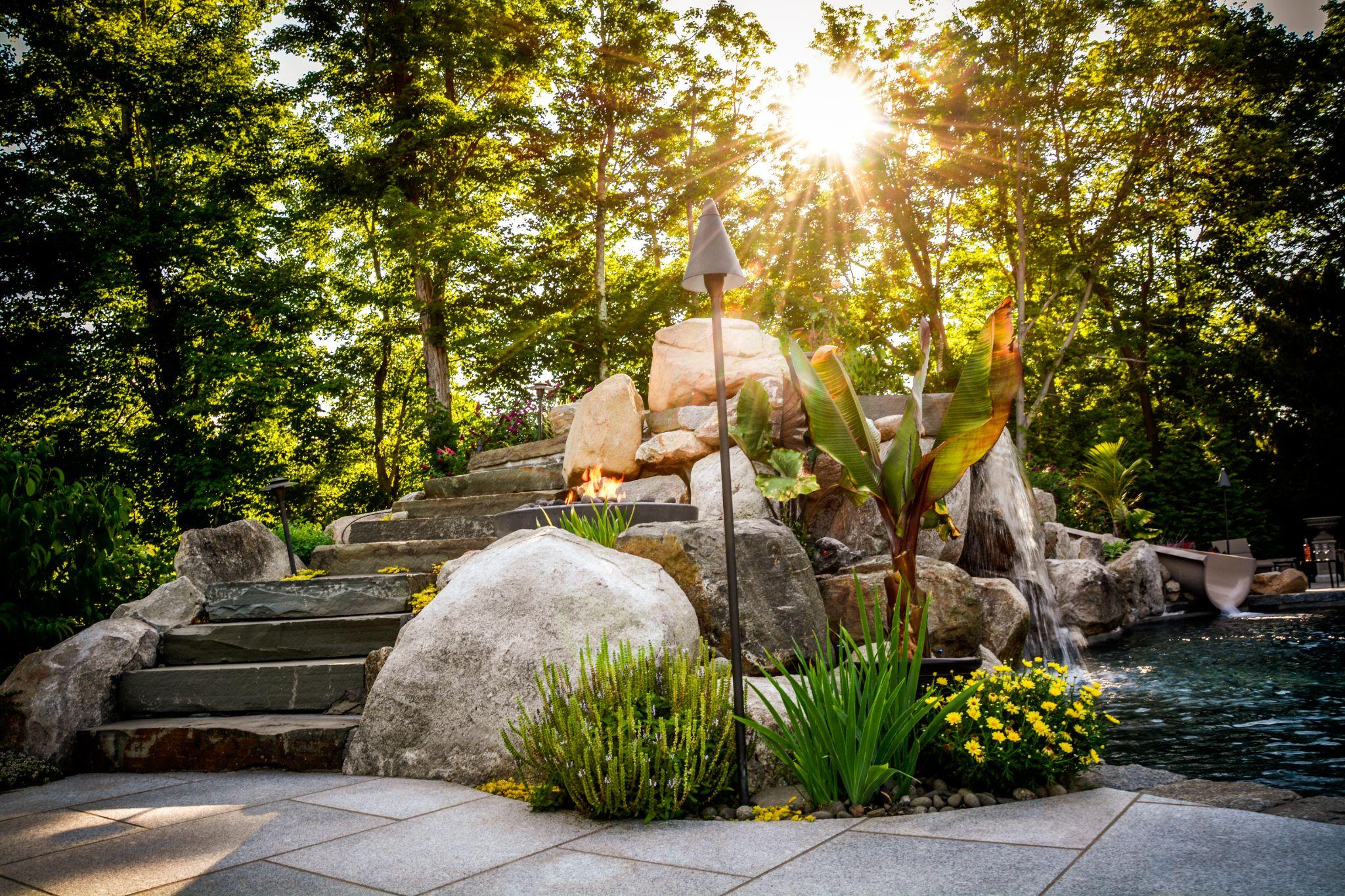
Plant selection has a direct impact on how much effort your landscape requires year after year. Early decisions either support ease or create unnecessary complexity.
Thoughtful plant choices account for:
- Mature size and growth habit
- Sun exposure and soil conditions
- Water requirements
- Seasonal behavior
- Pruning expectations
Many softscaping in landscaping questions come from properties where plants looked right initially but created challenges later. Overgrown shrubs, stressed plantings, and constant adjustment are usually the result of mismatched selections. A clear residential landscaping planting guide helps align plant choices with how you actually live on your property. When plants are chosen with intent, care becomes predictable and efficient. This clarity works best when planting decisions align with year-round care. You can learn how planting stays supported over time through professional landscape maintenance services.
Why Does Planting Layout Matter Over Time?
Layout determines how your landscape matures. Spacing, layering, and placement affect airflow, visibility, and long-term balance.
Poor layout often leads to:
- Plants competing for space too early
- Blocked views and crowded sightlines
- Increased pruning demands
- Declining plant health
Strong planting design for large landscapes considers the present and the future equally. When landscaping planting planning is done well, growth feels natural instead of disruptive.
How Does Softscaping Support Overall Landscape Enjoyment?

Softscaping shapes how you use and enjoy your property. It influences privacy, comfort, and how outdoor spaces connect.
When planting supports enjoyment:
- Spaces feel defined without feeling closed in
- Views are guided intentionally
- Seasonal change feels balanced
- The property feels settled rather than busy
Many homeowners revisit softscaping in landscaping questions after realizing their landscape looks good but does not feel comfortable. If you want a deeper understanding of how planting decisions influence the overall feel of your property, this explanation of how planting supports long-term landscape intent provides helpful context.
What Role Does Planning Play In Planting Success?

Planning prevents planting from becoming reactive. Without a plan, decisions are made one at a time, often without considering how they affect the whole.
Effective planning accounts for:
- Existing site conditions
- Drainage and grading relationships
- Shifting sun patterns
- Long-term care rhythms
- Integration with other landscape elements
A professional softscaping faq often emphasizes planning because it removes uncertainty. Climate volatility is an increasingly important factor in softscaping decisions. Extreme weather events, shifting regional hardiness zones, and extended drought periods mean that historic planting guides may no longer be fully reliable. Professionals now prioritize plants with increased resilience, including natives and adapted varieties that tolerate a wider range of conditions.
This involves selecting plants for the future, not just the present. When reviewing softscaping in landscaping questions, considering future water availability and temperature swings helps ensure the longevity of your landscape investment. This forward-looking approach minimizes the need for costly replacements and intensive intervention as the climate evolves.
How Do Professionals Balance Design And Maintenance?
Design that ignores maintenance creates frustration. Maintenance without design limits potential.
Professionals balance both by:
- Selecting plants that hold form naturally
- Grouping plants with similar care needs
- Designing layouts that allow access
- Respecting mature growth patterns
This balance supports an integrated landscaping approach where planting choices work with long-term care rather than against it.
How Does Communication Affect Planting Outcomes?
Clear communication shapes expectations and results. Without it, even well-executed planting can feel disappointing. Strategic softscaping significantly enhances property value and marketability. Thoughtfully designed planting schemes, particularly mature trees and well-maintained beds, provide exceptional curb appeal. This initial investment often yields a high return, as established landscapes are highly desirable to potential buyers. Furthermore, features like shade trees can reduce cooling costs, offering continuous energy savings.
How Does Communication Affect Planting Outcomes?

Clear communication shapes expectations and results. Without it, even well-executed planting can feel disappointing.
Strong communication addresses:
- How planting will change over time
- What seasonal care looks like
- When adjustments may be needed
- How success is evaluated
Many softscaping in landscaping questions stem from unclear expectations rather than poor decisions. Refreshing planting involves a strategic update that addresses performance and aesthetic goals. It often includes adding new focal points, replacing struggling specimens, or thinning out overgrown areas to restore balance and light. This process ensures the softscape continues to complement the hardscape and meet the property owner’s evolving needs for curb appeal and functionality.
When Should Softscaping Be Refreshed?
Softscaping evolves. Even well-planned landscapes benefit from periodic refinement. Common indicators include:
- Plants reaching maturity and crowding others
- Changes in how the property is used
- Shifts in light or drainage
- Desire for renewed seasonal balance
Refreshing planting is about alignment, not replacement. In mature landscapes, new planting must respect existing root zones and compete for established resources like water and light. Careful consideration of plant species, their mature size, and drought tolerance ensures the new additions enhance the existing structure without causing stress to established trees and shrubs.
How Do Mature Landscapes Influence New Planting?

Established landscapes bring complexity. Existing trees, root systems, and shade patterns influence what will thrive. Planting design for large landscapes often focuses on working with maturity rather than disrupting it.
What Should Already Be Considered Before Planting Begins?
Before planting starts, several factors should already be resolved. These include:
- Drainage and grading
- Irrigation coverage
- Soil preparation
- Maintenance access
- Long-term property vision
This coordination becomes especially important when planting aligns with broader landscape construction services.
How Does One Landscaping Partner Simplify Decisions?

Managing multiple vendors introduces gaps. Information gets lost. Accountability blurs. One partner simplifies decisions by keeping:
- Responsibility clear
- Communication consistent
- Design and care aligned
- Time commitments minimal
This structure allows your landscape to be managed proactively instead of reactively.
Bringing Clarity To Long-Term Planting Decisions
Planting decisions shape your property for years. When softscaping is planned thoughtfully, your landscape becomes easier to care for and more enjoyable to live with. Clear communication, planning, and unified oversight protect both your time and your investment.
If you are ready to move forward with clarity and simplicity, you can request a consultation today!
Summary
This blog answers common softscaping in landscaping questions by explaining how planting decisions influence long-term care, enjoyment, and clarity across residential landscapes.
Tags: